Speaking from the Heart is Optics11 Life’s interview series with researchers at the forefront of muscle and cardiovascular science. In this episode, we speak with Dr. Koen Reesink from the Cardiovascular Research Institute Maastricht, who talks about how combining engineering, mechanobiology, and clinical data can help researchers better understand aortic aneurysm disease.
The conversation focuses on a patient-centered approach to cardiovascular research. Koen explains how clinical disease manifestations, patient-derived cells, and functional in vitro models can be connected to study how blood vessels maintain integrity over time, and what happens when that system begins to fail.
The discussion also highlights how Optics11 Life’s technologies, including Pavone and Cuore, support research into vascular mechanics and function, drug response, and development of future prognostic tools.
Watch the conversation here:
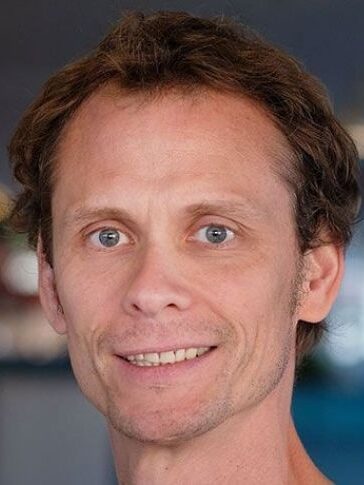
Dr. Koen Reesink
Dr. Koen Reesink is an associate professor and researcher at the Cardiovascular Research Institute Maastricht (Maastricht University Medical Center). Originally trained in Electrical Engineering, he has been active in biomedical research for more than 20 years, bringing together engineering, physiology, signal processing, and cardiovascular science.
His research focuses on the structure and function of large arteries, with particular attention to vascular mechanics, arterial stiffness, ventricular vascular interaction, and the biological processes that influence how blood vessels maintain integrity over time. His group works to understand the multi-scale relationships between vascular tissue structure, mechanical behavior, and cardiovascular disease.
In his current research, Dr. Reesink studies patient-derived models of aortic aneurysm disease. By connecting clinical data, patient tissue, primary cells, stem cell-derived models, and functional mechanical measurements, his work aims to reveal how vascular cells and tissues behave in health and disease.
Why watch this interview?
Aortic aneurysm is complex, often silent, and difficult to predict. In this interview, Koen explains how patient-derived models can help researchers study aspects of the disease that are difficult to observe directly in the clinic.
The discussion covers how in vitro vascular models can be used to study cell mechanical response, extracellular matrix formation, and disease-related changes in the smooth muscle function. It also explores how mechanical measurements may contribute to better prognostic monitoring and clinical decision-making in cardiovascular research.
Why is mechanobiology important in aortic aneurysm research?
Blood vessels are exposed to continuous mechanical forces: pressure, stretch, and tension. Mechanobiology tools help researchers understand how vascular cells sense and respond to these forces, and how those responses may change during disease progression.
In the interview, Koen emphasizes that understanding the mechanisms of blood vessels’ mechanical integrity and its failing is a key question in aortic aneurysm research.
How are Cuore and Pavone used in this research?
In Koen’s work, Cuore is used for the development and functional analysis of engineered vascular smooth muscle tissues that can generate their own tension and extracellular matrix. The platform enables researchers to study muscle contraction, drug response, and disease-related functional differences in patient-derived models.
Pavone is used as an indentation-based cell stiffness platform, helping researchers study the mechanical properties of vascular cells together with imaging and other measurement approaches.
What is the CARTA project?
The CARTA project builds proof-of-principle work with patient-derived cardiovascular models and aims to further develop reproducible workflows, platform capabilities, and technical adaptations of Cuore.
A long-term goal is to generate information that could support prognostic monitoring and decision-making in cardiovascular disease research. More information is available on the project page in Dutch. Read more about CARTA here.
Do you want to participate in Speaking from the Heart?
Send us an email to marketing@optics11life.com and tell us about your research.